Applications
One measure, many pipelines.
φ is a general structural prior. The same measure powers super-resolution, enhancement, astrophoto gradient removal and video today — and reaches into new domains next.
Live today
Super-Resolution ×2
● LiveUpscale images and video, structure-first, no invented detail.
φ Enhancement
● LiveContrast and sharpness placed exactly where φ sees structure.
Denoising
● LiveRemoves sensor noise and grain while φ preserves real detail — a small model that keeps structure sharp.
Gradient removal
● LiveAstrophotography: φ lifts the light-pollution and vignetting gradient while preserving stars and nebulosity.
Video ×2
● LiveFrame-by-frame upscaling, encoded to MP4 in your browser.
Measured, on every kind of image
Each pair is a real run of the exact model you can try in the studio — 100% zoom, bicubic left, phiXplorer right, PSNR measured against the original. Pick your field.
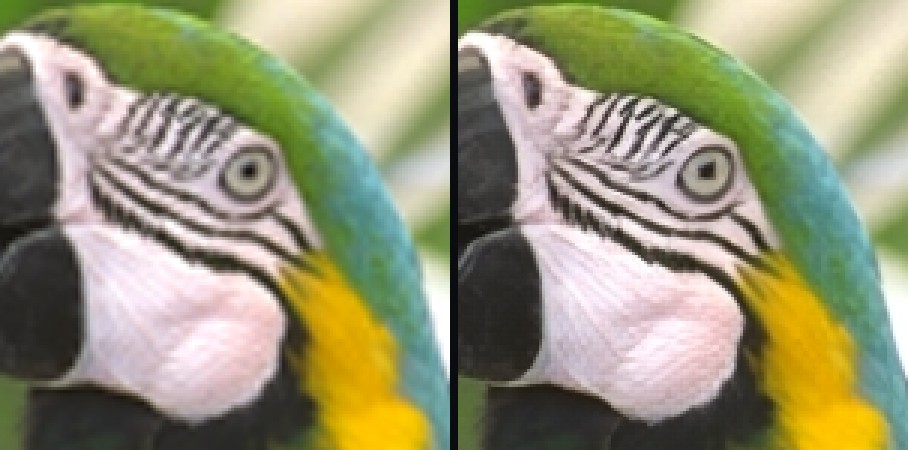 Nature & wildlife+1.5 dBUpscale ×2
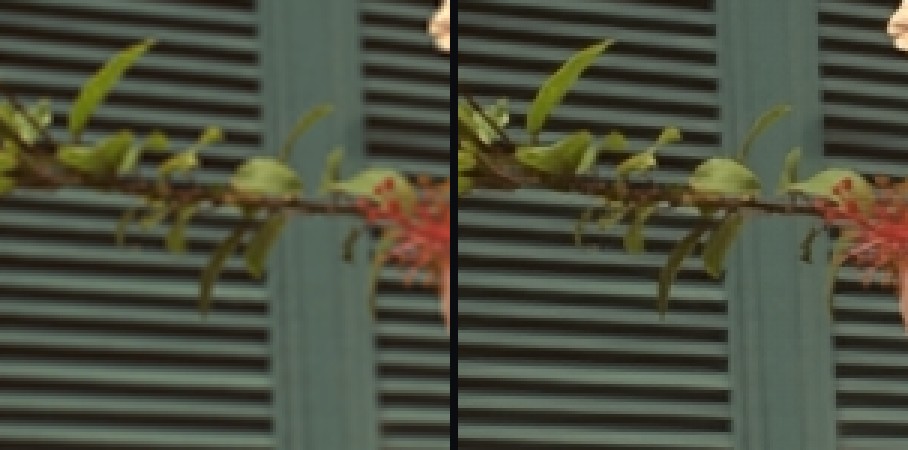 Nature & wildlife+2.1 dBUpscale ×2
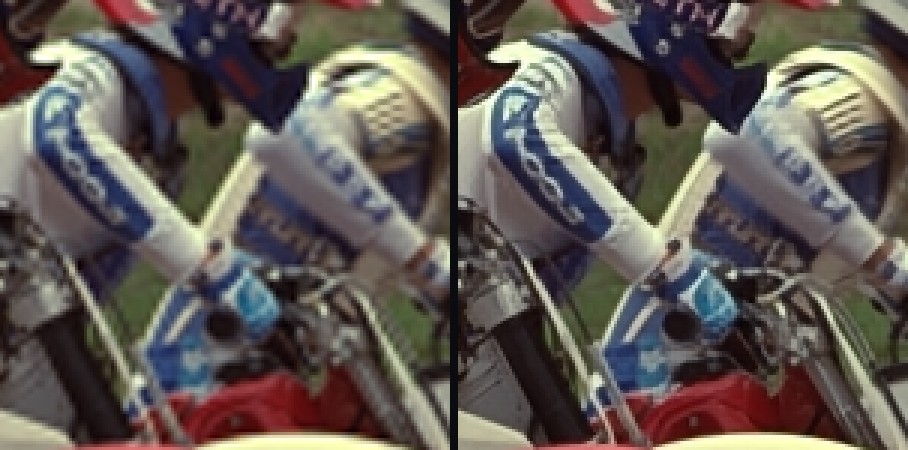 Nature & wildlife+2.3 dBUpscale ×2
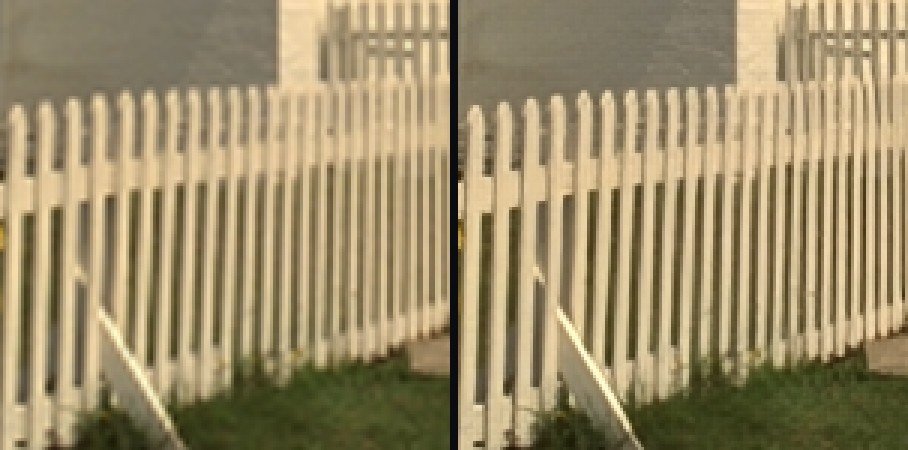 Architecture & detail+1.6 dBUpscale ×2
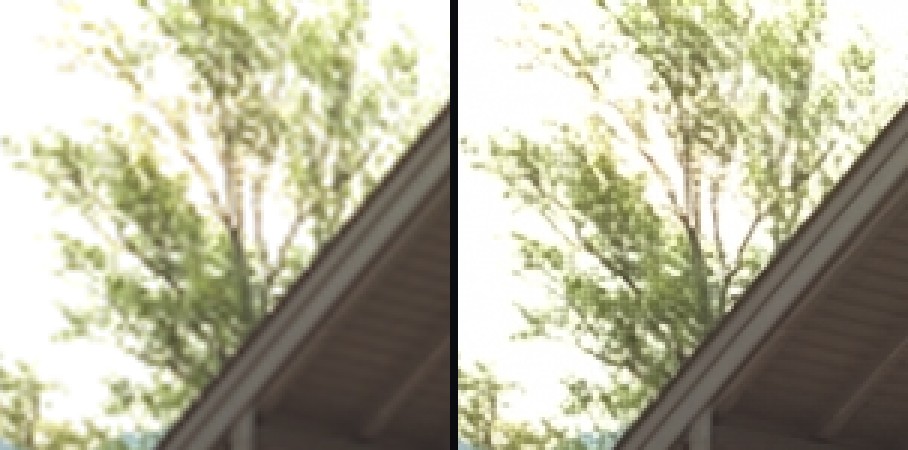 Architecture & detail+0.9 dBUpscale ×2
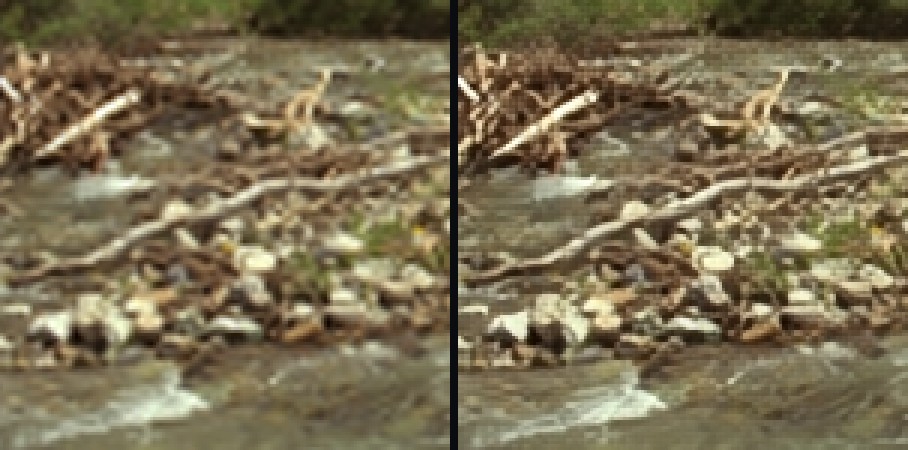 Nature & wildlife+0.4 dBUpscale ×2
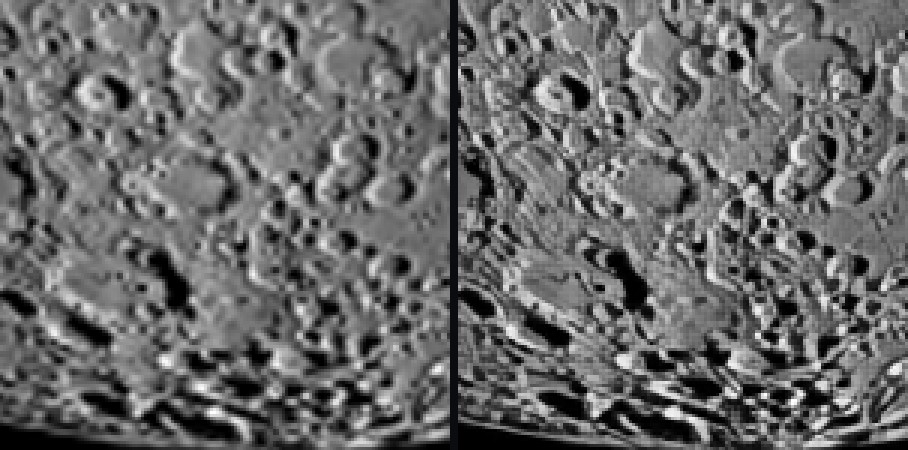 Astrophotography+0.3 dBUpscale ×2
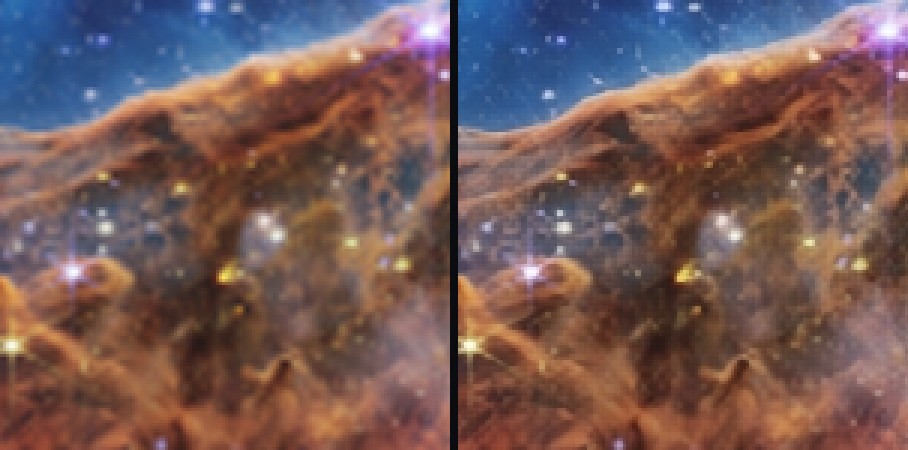 Astrophotography+0.5 dBUpscale ×2
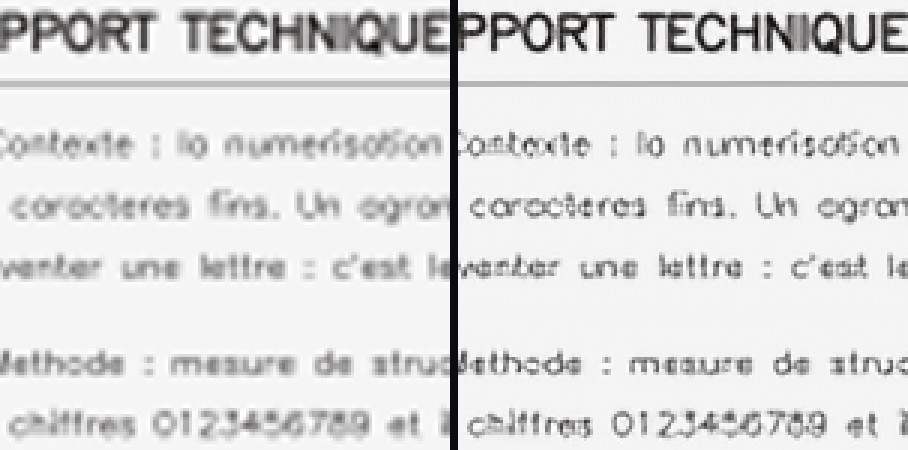 Documents & text+0.9 dBUpscale ×2
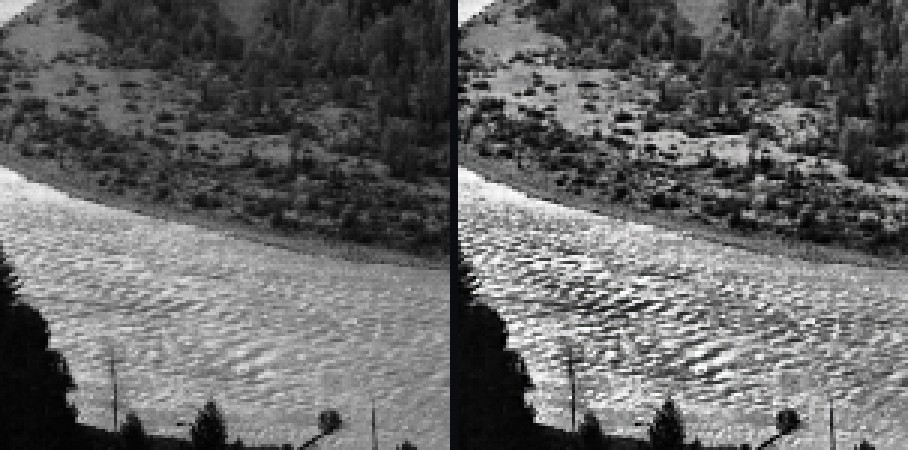 Old photossharpness ×2.9φ Enhance
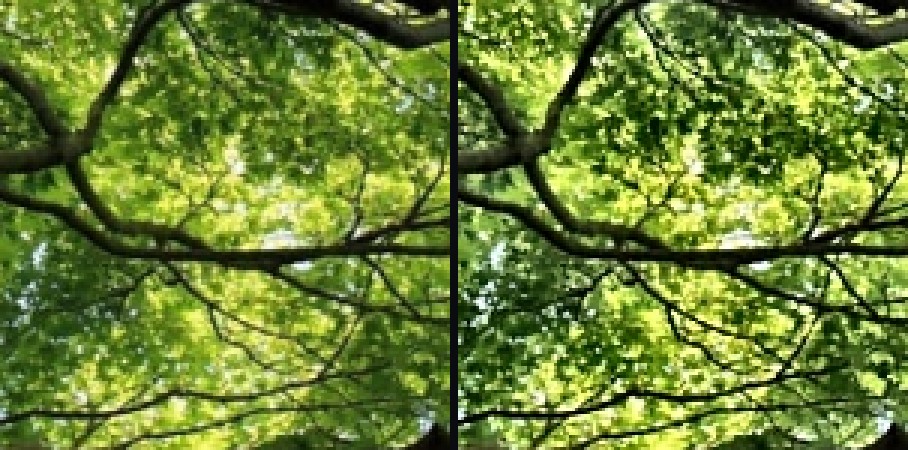 Nature & wildlifesharpness ×2.6φ Enhance
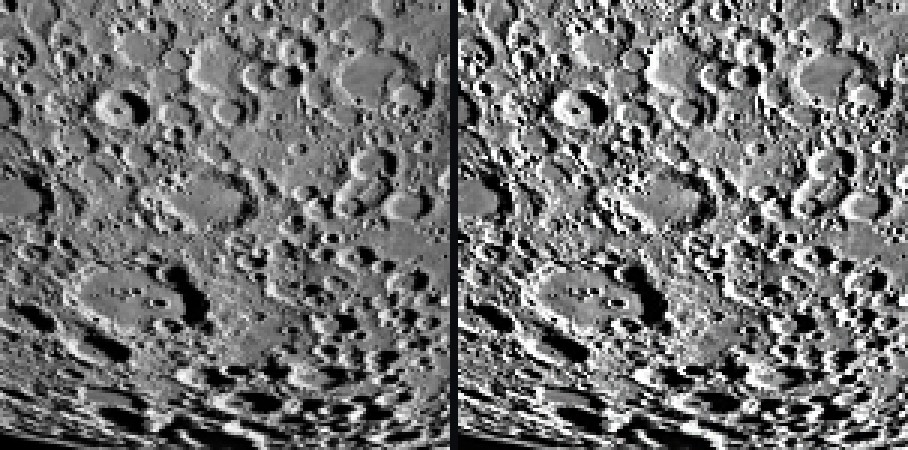 Astrophotographysharpness ×3.4φ Enhance
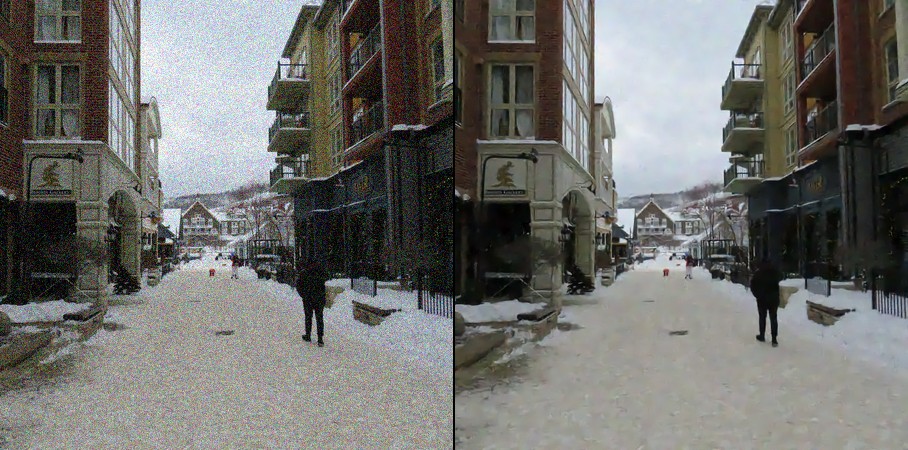 Architecture & detail+10.7 dBDenoise
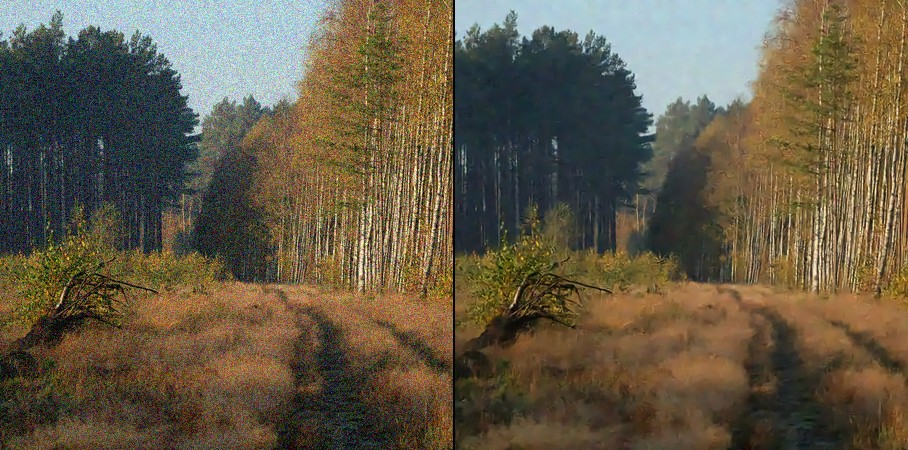 Nature & wildlife+8.8 dBDenoise
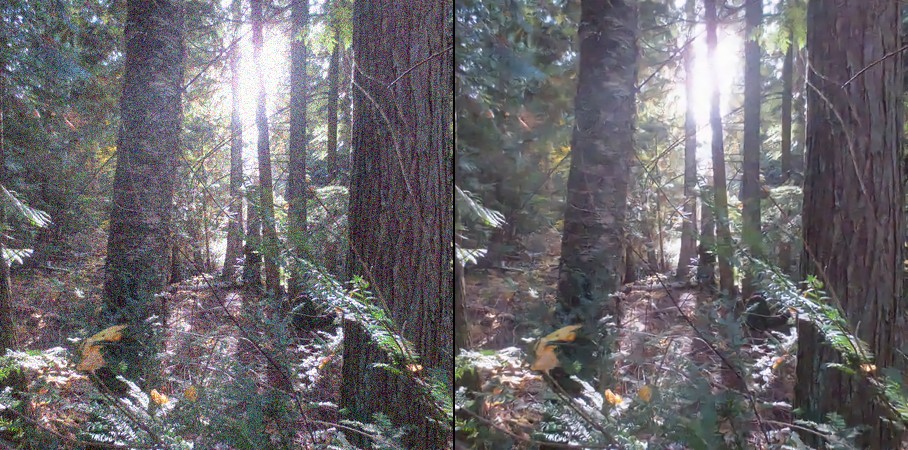 Nature & wildlife+7.7 dBDenoise
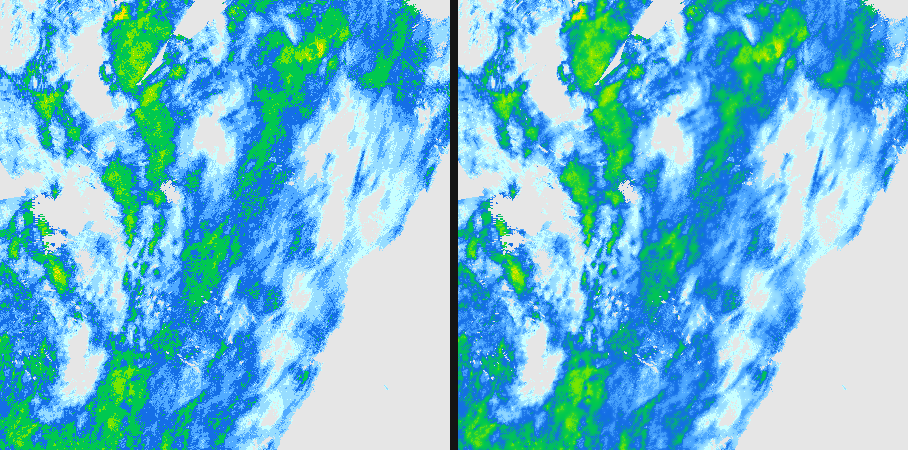 Weather radar−20 % errorRain recovered
 Retro games×4RetroPhit ×4
×8 pairs: a real low-resolution crop enlarged ×8 — no downscale, no reference, nothing hallucinated. ×2 pairs: original → ÷2 reduction (area) → ×2 upscale, PSNR measured against the original. Enhance pairs: same resolution, sharpness = Laplacian-variance ratio. Denoise pairs: Gaussian noise (σ≈22) added to a clean original, left = noisy, right = model output, PSNR measured against the clean original. Real-noise pairs: two frames of the same scene from the same camera — one at base ISO (the reference), one at ISO 6400 (left). No noise was added: it comes from the sensor. The frames are aligned by integer pixel shift and exposure-matched per channel (no resampling, so the noise is untouched); PSNR is measured on the exact crop shown, against the base-ISO frame. Crops are picked for legibility and structure, never for the best score. Source: NIND (Wikimedia Commons, CC BY 4.0), scenes held out of training. Retro pair: a frame captured from the emulator at native resolution, left enlarged ×4 pixel by pixel, right the RetroPhit model at ×4 — no reference exists, so no PSNR is shown for this pair. Radar pair: a real rain field reduced to a 10-colour palette; error is measured against the original field, on days never seen during training. Deblur pairs: a sharp film frame is blurred (Gaussian, σ = 1.5) and reduced ×4 by area, giving a soft low-resolution source; left = that source enlarged ×4 by plain Lanczos, right = the deblurring model at ×4; PSNR is measured on the exact crop shown, against the sharp original frame.
Moon: NASA/LRO · Nebula: NASA/ESA/CSA (Webb) · The Tetons (1942): Ansel Adams, US National Archives — public domain. Denoise samples (CC0, Wikimedia Commons): Blue Mountain Village — Transportfan70 · Autumn forest path — Vovogov90 · Mara Park woodland — Extemporalist. Retro game: Tobu Tobu Girl Deluxe — Tangram Games (Simon Larsen), artwork CC BY 4.0, code MIT; frame upscaled by RetroPhit. Radar: Deutscher Wetterdienst (DWD) open data. Films: Little Nemo (Winsor McCay, 1911) and Fantômas (Louis Feuillade, 1913) — public domain; Tears of Steel — © Blender Foundation, mango.blender.org, CC BY 3.0.
Research & roadmap
Super-Resolution ×4 & ×8
● On requestHigher zoom factors, run offline on your own hardware — 4.66 MB model, φ inside. See the ×8 previews in the gallery.
Denoising — real sensor noise
● On requestThe in-browser model learns synthetic noise. This one is trained on real sensor noise — signal-dependent, spatially correlated, chroma-dominant. Same 0.71 MB model, φ inside: on real photographs it gains +3.4 dB over the in-browser one, up to +7.7 dB on the noisiest shots. See the pairs in the gallery. Runs offline on your own hardware.
Real-time video player
● On requestUpscaling while you watch, on your own graphics card: ×2 in real time (360p to 720p) and ×4 in real time (to 1080p, 27 frames per second). On Big Buck Bunny, measured against the original 1080p film: 4 to 6 dB above the video upscaling built into consumer graphics cards, which itself scores below a plain player upscale.
Compressed video restoration
● On requestRemoves the blocks and mosquito noise of MPEG-2, MPEG-4 and MJPEG video, then upscales. Ahead of the best classic chain in all 16 cases tested (4 films × codecs and qualities, +0.15 to +0.42 dB), and 0.3 to 1.1 dB above a plain upscale, with less flicker.
Deblurring
● On requestUpscale ×4 and sharpen a soft source at the same time. Under strong blur, the best result we measured: 2.2 to 3.3 dB above a plain upscale on four films, ahead of IMDN, a reference published network. Real-ESRGAN, though trained for blur, came last every time — it repaints faces instead of restoring them.
φ Detection — RGB & IR
● On requestStructure detection validated in our publications, across visible and infrared. Not yet in-browser — available on request.
ROI extraction
● On requestSemantic-free regions of interest, driven by φ alone — published and functional. Available on request.
Lossless compression — Phidelity
● On requestA lossless and bounded-error file format that checks itself: every file carries the checksum of the decoded data, so an error is always detected, never returned silently. Against JPEG XL at its strongest setting (effort 9): infrared video from fixed cameras 36 % smaller, depth maps 7.5 % smaller, X-ray radiographs 7 % smaller, on par on still infrared and camera photos, with compression 5 to 12 times faster and 4 to 5 times less memory. Against the space standard CCSDS-123: infrared images 14 % smaller. Raw side-scan sonar: 3 % smaller than JPEG XL losslessly, and up to 41 % smaller with a guaranteed relative error of a few tenths of a decibel. With a guaranteed maximum error below the sensor noise: half the size of JPEG-LS near-lossless on infrared video. Decodes on a microcontroller in 57 KB of working memory. JPEG XL stays ahead on CT, MRI and ultrasound. Measured on public datasets (LTIR, ARCO, TUM RGB-D, Starosolski medical, CLIC, raw.pixls.us, AVIRIS, JNCC side-scan sonar, ARIS imaging sonar), every file decoded and checked.
Scientific Imaging
RoadmapStructure-aware processing for microscopy, astronomy, remote sensing.
Quality Assessment
RoadmapA structural score to rank and audit image pipelines.
Weather radar archives
ResearchRadar archives kept only as colour maps have lost the rainfall itself: each colour hides a whole range. We recover the rain inside each colour, never outside it. On a real archive and a whole year never seen: 28 % less error than the best colour-by-colour reading, more than 2.5× the gain of the classic restoration method, yearly rainfall total within 1.5 %. It matches a state-of-the-art network with 32× fewer parameters, 1.8× faster on an ordinary CPU; a high-accuracy version goes beyond it. Validated on German, US and French (Météo-France) data, winter and summer storms, JPEG-compressed archives.
Retro games — RetroPhit
RoadmapReal-time upscaling for retro and homebrew games. A 0.47M-parameter pixel-art model beats the best classic upscaling shader by 2.08 dB (PSNR, 200 test tiles), and the free model — 25 KB — holds 60 fps on the CPU alone. Our ×4 photo model ships inside it too: on clean game frames it outscores models trained on games, +10.2 dB on Freedoom. Small models learn structure, not a domain.
Some capabilities — φ detection (RGB & IR) and ROI extraction — are already validated in our publications but not yet packaged for the browser. They are available on request.